




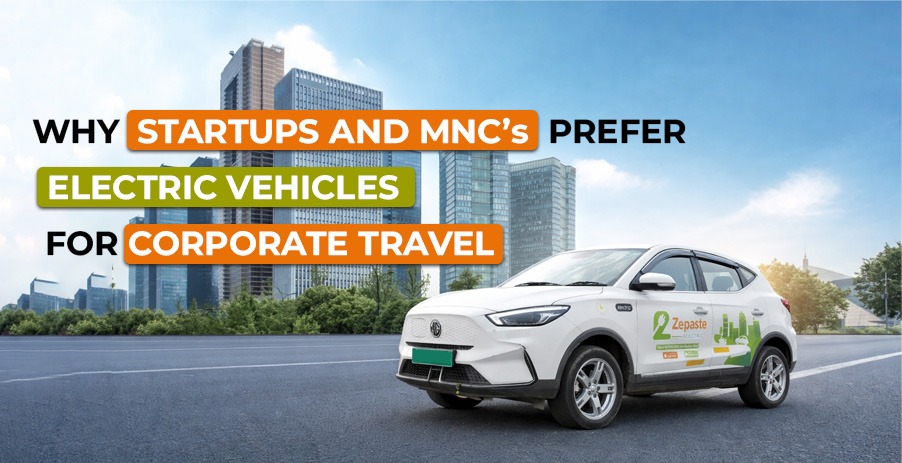
The corporate landscape in India is undergoing a quiet but powerful revolution. It’s no longer just about corner offices or flexible work hours; the change is happening on the road. As companies scrutinize their operational costs and environmental footprints, the traditional diesel or petrol-powered fleet is rapidly being replaced.
For Startups and Multinational Corporations (MNCs) alike, the decision to switch to electric mobility is becoming a strategic imperative rather than just a "green" choice. In bustling business hubs where traffic congestion and pollution are daily battles, the demand for an Electric Vehicle for Corporate in Gurgaon and Delhi NCR has skyrocketed. But what is driving this mass adoption? The answer lies in the intersection of cost-efficiency, sustainability goals, and employee well-being.
1. The ESG Mandate: Meeting Global Sustainability Goals
Environmental, Social, and Governance (ESG) standards have become an important component to Multinational Corporations (MNC) Business Strategies and Corporate Social Responsibility (CSR) as well. Investors, Stakeholders and Corporate Customers demand that corporations provide transparency in regard to their Carbon Footprint.
The majority of a corporation’s Scope 3 emissions are attributed to Corporate Travel and Employee Transportation. By utilizing an Electric Vehicle (EV) Fleet, Corporations can significantly decrease their own Carbon Emissions by adopting the use of an Electric Vehicle for Office Commute, as an Electric Vehicle produces zero tailpipe emissions and can help Corporations meet their Net-Zero Goals much sooner than the additional use of Carbon Offsetting Programs. Corporations have a Visible and Tangible Commitment to Fighting Climate Change when they adopt the use of Electric Vehicles for their Global Branding in Gurgaon.
2. Operational Cost Savings: The Bottom Line
While there are many economic incentives to purchase EVs based on their lower environmental impact, one of the biggest reasons for their popularity among startup companies is their much lower ongoing costs associated with owning/operating them compared to conventional ICE vehicles. Here are several examples of how this applies and translates into significant financial savings over the life cycle of an electric vehicle.
Fuel vs Charge Cost: The cost-per-kilometer driven using an electric vehicle is significantly less than that of a petrol or diesel-powered vehicle. As fuel prices vary widely, the electrical charging cost provides a greater degree of consistency and predictability --- therefore currently establishing a lower total overall operational cost to operate electric vehicles.
Maintenance: ICE vehicles have thousands of moving components (transmission, spark plugs, valves, etc.) whereas EVs typically have fewer than 10 moving components, resulting in a significantly decreased amount of time and cost to maintain EVs over the life of the fleet. This translates into less downtime and less maintenance costs for EVs over the life of the fleet.
For any logistics manager or VPH, it is very straightforward to see the total cost of ownership (TCO) will be substantially lower if an Electric Vehicle is adopted for Corporate use in Gurgaon; therefore freeing up working capital, thereby enabling companies to reinvest capital toward core business growth.
3. Beating the NCR Pollution and Policy Curbs
The unique circumstances place an additional burden on all businesses operating fleets in the NCR (National Capital Region), however, the recurring GRAP (Graded Response Action Plan) restrictions on diesel vehicles and the limitation of ICE vehicle movement due to air quality during the winter months can have a serious impact on a company.
A company that uses traditional cabs to provide transportation services to employees would find itself in a position of significant disarray as a result of the GRAP restrictions, which would prevent employees from getting to work on time and create a shortage of cabs available for transporting employees to work. By using electric cars to provide employees with an alternative form of transportation, companies can provide employees with continued service and keep employees arriving to work on time, without any concerns regarding regulatory roadblocks.
4. Employee Experience and Satisfaction
Millennials and Generation Z are particularly aware of their employer's values. They prefer to work for organizations that show social responsibility by providing electric vehicles (EVs) for their employees to use on their daily commute.
An electric vehicle (EV) signifies that a company cares about its environmental impact.
Additionally, riding in an EV is more enjoyable than riding in a diesel cab. Electric vehicles are quiet and produce no vibrations, making for a far more relaxing and productive ride. Employees will appreciate the quieter cabin of an EV after they have endured a long day full of meetings or coding, enabling them to either relax or focus. In essence, the superior traveling experience with electric vehicles contributes to the overall satisfaction and retention of the employee..
5. Corporate Image and Branding
How others perceive you or your company will be determined by the first impression. The means of transportation a client uses to reach your office or an executive travels to and from a summit is very impactful as to how the company is perceived. For example, a green-plated electric vehicle shows the company is innovative, cutting-edge, and environmentally responsible.
By utilizing a sustainable fleet, startups can reinforce the narrative of being future-ready as they pitch to potential investors. Using a sustainable fleet will set them apart from other brands in their industry that continue to use legacy and environmentally harmful logistics.
Conclusion
The adoption of Electric Vehicles for Corporate use in Gurgaon is not just a trend, but rather, it has become the norm for Corporate Mobility. By decreasing the cost of operations, complying with the company’s environmental regulations, and providing a better experience for employees, Electric Vehicles provide an advantage from the triple bottom line perspective (economics, ecology and social) that smart businesses cannot ignore.
As the infrastructure continues to improve and as battery technology advances, the barriers to entry will decrease even further. Today, the question for both Startups and Multi-National Corporations is not ‘Why transition to Electric Vehicles?’, but rather, ‘How quickly can we transition to Electric Vehicles?’
Are you ready to transition your corporate fleet to electricity?
Zepaste is at the forefront of creating sustainable Corporate Mobility. Get in touch with us today and learn how we can assist you in transitioning towards a greener, cleaner and more efficient commuting future.