




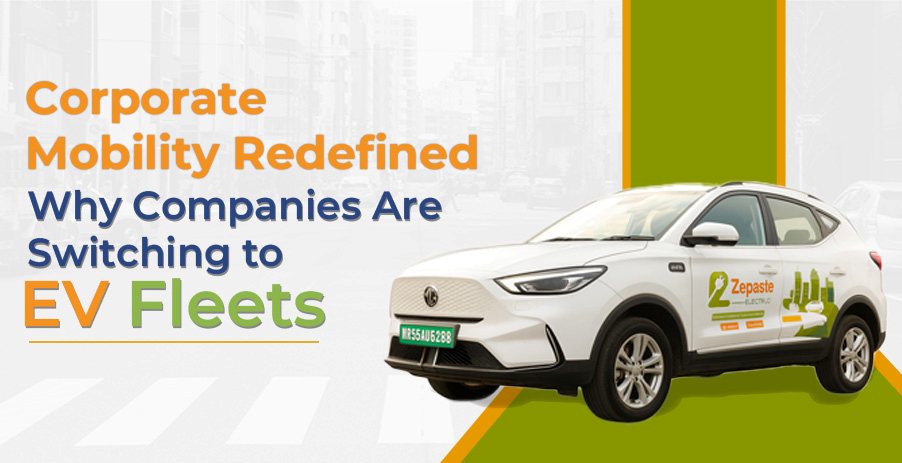
For years, having a "company car" has been a standard benefit—a dependable gasoline or diesel four-door sedan, a badge of honor for operating more robustly, or a simple means of providing sales persons transportation like the rental car industry. It was a budget line item; operational spending was always going to yield the same costs.
Now, the whole concept is being unplugged and refashioned.
A quiet revolution is underway in corporate parking lots and logistics hubs all over the world. Companies, whether global logistics giants or local small businesses, are embarking on a naive and growing transition from traditional internal combustion engine fleets to electric vehicle (EV) fleets.
Because why? Simply a 'green-washing' scheme to look righteous on my annual report?
In reality, it is much larger. A conversion to EVs is undoubtedly one of the smartest business decisions a company can make this decade, if not longer! A calculated power play that combines fiscal responsibility, brand reputation, and talent strategy. This is not simply an environmental play, where we pride ourselves on, it is a business play, a huge strategic smart play.
Here is our reasoning on how companies are re-imagining their mobility, and EV fleets will be the new standard.
1. The Financial Case: It's All About Total Cost of Ownership (TCO)
The transition to electric vehicles (EV) isn't being pushed by an attention-grabbing headline about climate change. It is driven by a spreadsheet. C-suite executives and fleet managers see the distinction between purchase price and Total Cost of Ownership (TCO).
Yes, the sticker price of an EV is higher, but the savings over the life of the vehicle is staggering, if not unquestionable.
Incredible Fuel Savings: This is the big fish. Electricity is far less expensive than petrol or diesel, and researchers who have tracked the costs, per kilometer, of both vehicles, have consistently shown that "fueling" an EV is 70-80% less than an equivalent ICE (internal combustion engine) vehicle. If you manage a fleet of hundreds of vehicles and many of those are either higher-mileage electric vehicles or used for business travel, those savings go from nice cost avoidance to a competitive advantage.
Dramatically Lower Maintenance: An electric motor has a small fraction of the moving parts of a combustion engine, so oil changes and spark plug replacements are not an issue anymore. No new filters or exhaust systems to manage for any number of other complexities. This means reduced maintenance costs of about 40-50%, and equally important is a reduction in down-time. More time on the road means more productivity and revenue.
Incentives and Tax Benefits: Tax benefits and governments incentivize this all over the world. Corporations can leverage federal tax credits, state rebates, lower BIK (Benefit-in-Kind) taxes, and other financial perks that directly lower the net cost of acquisition, making the TCO argument even more lopsided in favour of electric.
2. The ESG Imperative: Walking the Sustainability Talk
In the current marketplace, Environmental, Social, and Governance (ESG) objectives are no longer considered a "nice to have" - they are central to business and important for attracting investors and building consumer trust.
A Tangible ESG Win: A fleet is usually a company’s largest source of direct emissions (Scope 1 emissions). Transitioning to an electric vehicle fleet is one of the most visible, impactful, and measurable decarbonization actions a company can take, and rapidly moves a company toward its “Net Zero” commitments.
Building Brand Reputation: Consumers and business partners are actively choosing to engage with brands that share their values. A fleet of silent, non-polluting electric vehicles is a rolling billboard for a company, and a tangible manifestation that a company is progressive and responsible, and cares about the wellbeing of the communities it operates in.
3. The Talent War: The New Must-Have Employee Perk
The competition to attract the best talent is hot. Today's workforce, especially Millennials and Gen Z workers, are seeking more than just salary; they want to work for companies with purpose and a positive impact.
Attract and Retain Talent: Providing an EV for the commute to the office is a strong differentiator. It is a high-value benefit that tells potential hires that this is a modern, sustainably focused, employee-friendly company. Most employees would be proud to drive a company EV, and will consider this specific benefit for their employment.
Workplace Charging: The new "corner office" benefit will be the EV charging station. By providing EV chargers, companies can support their own fleet of EV vehicles, while encouraging employees to make the switch in their personal lives. This creates a powerful sustainability culture starting with leadership looking to set the standard for sustainability.
Employee Wellness: And let's not forget about the drive. With their quiet and smooth ride, EV vehicles are less stressful to drive than a conventional vehicle. A lower stress, less polluting and wasteful commute will make employees arrive at work (or home) happier and more focused.
4. The Operational Upgrade: Future-Proofing the Fleet
More than being TCO or branded, EVs can simply be classified as a technological upgrade. They are smarter, more connected and more efficient.
Reduced Downtime: As cited earlier, reduced maintenance means vehicles are working for more days during the year.
Smart Telematics: Cutting-edge EVs are data centres on wheels, helping fleet supervisors assess vehicle health, location and route optimization, and, for this reason, even more efficiencies.
Energy Resilience: Companies operating their own charging depots can manage their "fueling" costs; they can charge their vehicles overnight when electricity is less costly and plug in to on-site solar and make their whole energy supply essentially free and completely green.
The Hurdles Are Fading
The two conventional complaints about electric vehicles are now quickly becoming irrelevant, at least in the corporate sphere. Let's take a look at these two complaints:
Cost - The total cost of ownership argument has already prevailed in the cost argument. The upfront cost is referred to as an investment instead of an expense, and there's a noteworthy value proposition for fleet managers when calculating their ROI.
Charging - This is a non-issue for most fleets. Most fleet clientele do not rely on the public infrastructure as the individual consumer fleets for charging their electric vehicles. Companies can build their own electric vehicle charges at the office or warehouse. In instances of an electric vehicle used for office commute or local deliveries, the vehicle can charge overnight and start with a full "tank" each morning.
In summary, we are settled on this topic. The transition to EV fleets is no longer a question of "if," but a question of "when" and how quickly. This is a tactical decision that's hard to come by: cost reduction, enhanced branding, employee attraction, and improvement of product sustainability and efficiency. You can even hear the sound of a corporate fleet of vehicles redefining corporate mobility as it silently whooshes down the road.
Ready to Redefine Your Fleet?
Are you prepared for your company's next leadership role? The transition may feel complicated, but you're not alone in this process.
Zepaste can be your experienced partner to electrify your fleet. We design and implement tailored EV solutions for your business goals, from a deep-dive Total Cost of Ownership (TCO) analysis to installing the appropriate charging infrastructure and fleet management.